
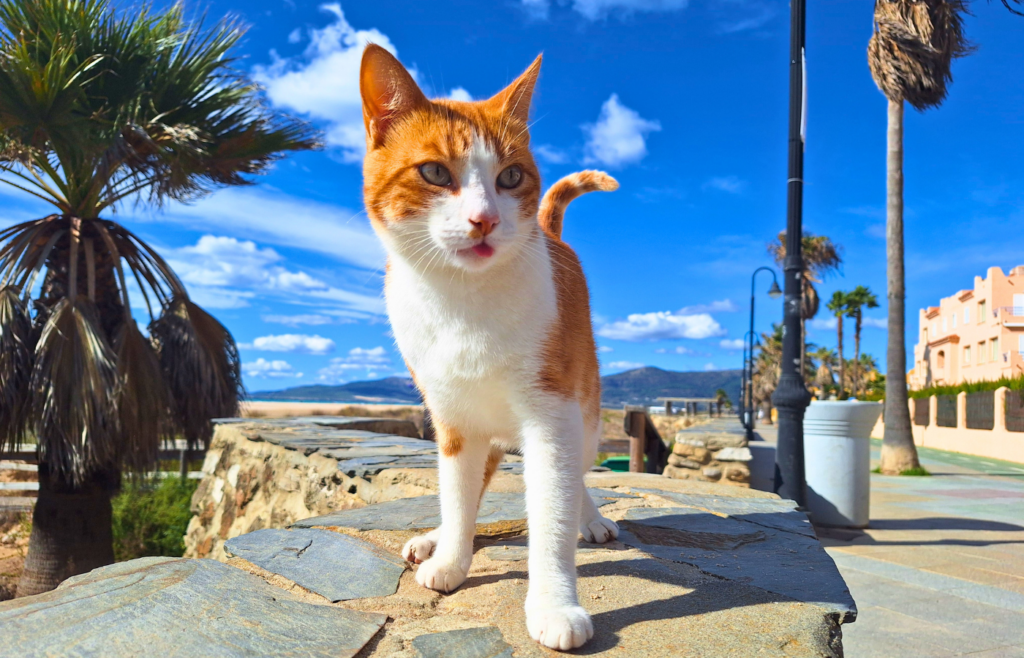
The cats you meet on the streets of Tarifa may be indoor-outdoor cats with a loving home, but most are unclaimed street cats. Here are over 20 facts about street cats you might not have known before.
Did you know..?
- That not all street cats are feral cats? There are feral and friendly street cats in Tarifa. The difference between feral and friendly is whether they are fearful of humans or not. Some might have been abandoned by their families or escaped. People feeding local strays may also end up socializing them to some degree
- That street cats live only 4 to 8 years? Once they survive kittenhood, life outside in wind, rain, and strong heat remains tough. Finding food, dodging cars, fighting for survival, and caring for their wounds takes a lot of energy. Meanwhile, indoor cats can live well up to 15 years, and occasionally beyond 20 years of age
- Just like indoor cats, street cats sleep a lot? Per day, they sleep about 12 to 20 hours, only moving to change sleeping positions, groom themselves, and stretch. Street cats often have their favorite sleeping places. But it’s possible to give them better options by building them outdoor cat shelters. These will keep the street cats warm, safe, and healthy

- That female (street) cats can have 2 to 3 litters of kittens per year? Each time, she will have 4 to 6 kittens on average. Her female kittens become sexually mature at only 4 months of age and a cat pregnancy only takes about 65 days. So without help, the original street cat mother can become a great-grandmother of over 150 kittens in one year, most of whom won’t live a happy life. Stopping the cycle of suffering is why getting street cats sterilized is so important
- That street cats are mostly active around dawn and dusk, also known as ‘cat hour‘? Twilight is their best time for hunting for food and the time they’re most awake
- That street cats and feral cats are the same species as domesticated indoor, bred cats (felis catus)? Humans domesticated cats 9500 years ago to be our helpers and furry companions. Since humans intervened in their development, cats are not wild animals and are therefore humanity’s responsibility. Even if a feral cat is afraid of us and otherwise very self-sufficient, they are dependent on us
- Street cats shouldn’t live off human food? Even the cheapest cat food is more nutritious than human foods such as morcilla Rondeña, bread, rice, too-salty sobrasada, and deep-fried fish. A bag of cat food or cat treats in your local Tarifa Alimentación convenience store can cost as little as €1. For that low price, you can make a lot of little cat friends
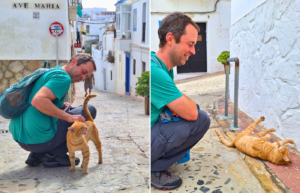
- That friendly street cats will purr, rub up (bunting) against your legs or arms, slow-blink, and make biscuits (kneading) as a sign of trust and love? Friendly street cats are very capable of letting you know they are happy to see you
- That street cats and kittens love to play? Oftentimes, there are some volunteers to feed cats in the neighborhood, but almost no one has time to play with them. It’s as simple as throwing a piece of dry cat food a few meters or dangling an old shoestring in front of them and they will go in full hunter mode to chase and catch their ‘prey’. Playing is very good for their mental health and reduces their stress!
- That street cats, just like house cats, spend 30 to 50% of their day grooming themselves or their friends? Grooming is important to any cat for hygiene, regulating their body temperature, forming social bonds, and feeling content
- That male unneutered street cats can grow huge cheeks and often get into fights with each other? The testosterone hormones cause the cheeks to grow, which helps protect their faces during catfights over fertile female cats. If a male cat is sterilized before they’re sexually mature, they won’t develop these big hunky jowls. The battle scars from regular tomcat duels often take a long time to heal. Male street cats may develop abscesses in places where they’ve been bitten or scratched by their opponent
- That street cats have a fixed territory that they roam? In urban environments such as Tarifa city, their territory is smaller than outside of urban environments, even limited to a single block or just a few blocks of housing. A male street cat’s home range is larger than a female’s because they tend to go farther to find female cats in heat to mate with. Getting your local cat colony TNR’d (Trap–Neuter–Return) helps that colony not grow and spread and will increase the street cat’s quality of life
- That street cats in Tarifa mostly catch and eat lizards, small mammals such as mice, and birds? Their diet may also contain insects, fish, garbage, and cat food that volunteers lay out
- That Kitten Season in Tarifa lasts from April to October each year? Kitten season is when female (street) cats’ fertility is high due to lots of warmth and daylight, which causes them to go into heat. A cat in heat will yowl, be extra affectionate, and be restless in trying to find a mate to reproduce with. All because of the production of estrogen hormones. The time they’re in heat lasts for about a week. Though the majority of kittens will be born between April and October, kittens can also be born outside the time window known as Kitten Season
- That cats with tipped ears have already been Trapped, Neutered, and Returned? If a cat goes through a TNR program and is released back into their colony, you will often see they have a piece of the pointy end of their ear missing. This is for volunteers to easily identify which cats have already been sterilized. During the sterilization surgery and under full anesthesia, the veterinary will cut off a piece of the street cat’s ear to mark them. Cats that have tipped ears often also received basic vaccinations
- That unlike (street) dogs, street cats don’t do their business on sidewalks and streets? A cat’s instinct is to bury their pee and poop in loose sand or gravel, near bushes in parks or shrubs nearby. Peeing is also an important way for cats to mark their territory. If cats pooping in your garden annoys you, make sure to support your local TNR program so they can humanely reduce the street cat population
- That it’s quite easy to befriend a non-feral street cat when they’re a little shy? Just squat down to make yourself less of a threat, blink slowly, and let the cat approach you instead of approaching the cat. If you talk in soft and gentle tones to them or make a friendly mrrrow sound, and stick out your hand or finger, the street cat may come to smell you. Who knows, maybe they’ll even rub up against you or hop on your lap! If you visit their hangout spot more often, the cat will be happier to see you each time you visit
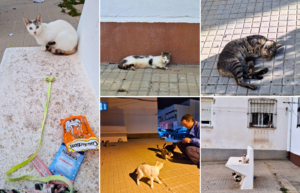
- That street cats have places where they scratch their claws to keep them in peak condition? All cats need to scratch their nails on something. But unlike indoor cats that (should) have dedicated scratching posts and cardboard scratch mats, street cats use trees and cardboard to mark their territory, keep their claws trimmed, and show that they’re happy
- That the socialization window of (street) kittens is between 2 and 7 weeks of age? That’s the perfect time for them to learn positive experiences with humans as they develop from little infant nuggets to curious toddlers and independent teens. If you encounter kittens on the streets of Tarifa don’t separate them from their mother. Even if the mother is feral, it’s possible to create positive experiences for the kittens. The shortest way to a kitten’s heart is by playing with them or petting them. It’s possible to socialize a cat at any age, but the older the cat, the longer it will take before they trust you
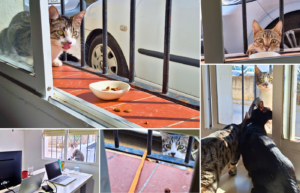
- That street cats often carry some parasites or diseases? But fret not, with proper preparation, it’s easy to still hang out with street cats without catching anything. Just make sure to bring hand disinfectant or wet wipes for yourself and use them after touching a street cat. Pet them only in places where their fur looks healthy. You do not need to worry about catching rabies, as Spain has been free of rabies since 1978. As long as you respect a street cat’s boundaries, it’s unlikely they will scratch or bite you
- That taking a street cat in is very easy? First of all, the cat often chooses you, which is something people call the ‘Cat Distribution System‘. If you choose to take in a street cat, make sure to bring them to the vet as soon as possible to deworm, deflea, vaccinate, microchip, and sterilize them. It’s best to contain them in a small room at first to acclimate to indoor life. Make sure that they eat well. It takes three weeks
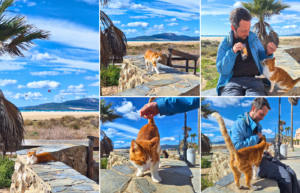
We hope you learned something about street cats today and will say a friendly pspsps to the ones you meet in Tarifa
Author

Iris Veldwijk
I’m a catsitter and travelblogger of more than a decade. Besides cats, I also like hitchhiking, kayaking, sailing, hiking, and making dumplings.
I’m a catsitter and travelblogger of more than a decade. Besides cats, I also like hitchhiking, kayaking, sailing, hiking, and making dumplings.